Cell Phone/Mobile Device Policy
Cell phones and mobile devices are a constant presence in life, and schools are not immune to this reality. As a district, we realize such devices are a helpful aid and sometimes a necessary tool in today’s world. However, they can often be a distraction, especially in an educational setting.
To ensure our school policies regarding cell phones and other devices align with their ever-present nature and the educational needs of our students, our district developed a focus group to do just that. (See the "How were the Policy Changes Developed" section for details.)
Highlighted below are the resulting changes to the policy Board Policy 3245: Students and Telecommunication Devices. The CVSD Board of Directors adopted the revised Policy 3245 and Procedure 3245AP on March 24, 2025. They go into effect in August 2025.
After reviewing this page, please complete this form if you have any feedback, questions, or comments.
Cell Phone and Mobile Device Policy Highlights
Effective August 2025
High School:
High school students' use of telecommunications or mobile devices will be limited to before and after the regular school day and lunch break, or if a school administrator authorizes the student to use the device. Students may access their devices in an emergency situation that involves imminent physical danger, as long as it is safe to do so.
Middle school students will not use telecommunications or mobile devices during the school day unless an emergency situation exists that involves imminent physical danger or is authorized by the school administrator. (No change to previous policy.)
Elementary school students will not use telecommunications or mobile devices on school grounds from the time they arrive to the time they leave unless an emergency situation exists that involves imminent physical danger or is authorized by the school administrator or school staff. (Note this includes smartwatches.)
Consequences for Violation of the Cell Phone/Mobile Device Policy
Students are warned and reminded of the rules relative to each school level, which may involve confiscating the student’s device and returning it to the student at the end of the class period or the school day. Failure to turn the device over for the class period or school day will result in student discipline.
- The student’s mobile device will be confiscated and returned to the student at the end of the day;
- Parents/guardians will be notified and/or asked to pick up the student’s mobile device;
- A meeting may be held with the student and their parent/guardian to discuss a success plan if excessive offenses continue; and/or
- The district may administer appropriate interventions and student discipline.
Background to Considering a Policy Change
Parents, staff, and our general community have recently expressed concern about diminished educational focus and struggles with mental health within our schools. Research indicates that cell phone use by young people is widely known to contribute to mental health issues, and they are often a disruption to the learning environment.
To respond and gauge our community's feelings toward cell phone use in schools, CVSD issued a survey to all parents, all secondary students, and all staff in the winter of 2024-2025, seeking input on potential changes to the district's cell phone policy and procedure. More than 5,500 survey responses and a thorough study of recent research helped guide our Cell Phone Policy Focus Group to make recommendations to the CVSD Board of Directors on a revised cell phone and mobile device policy.
Research and Data
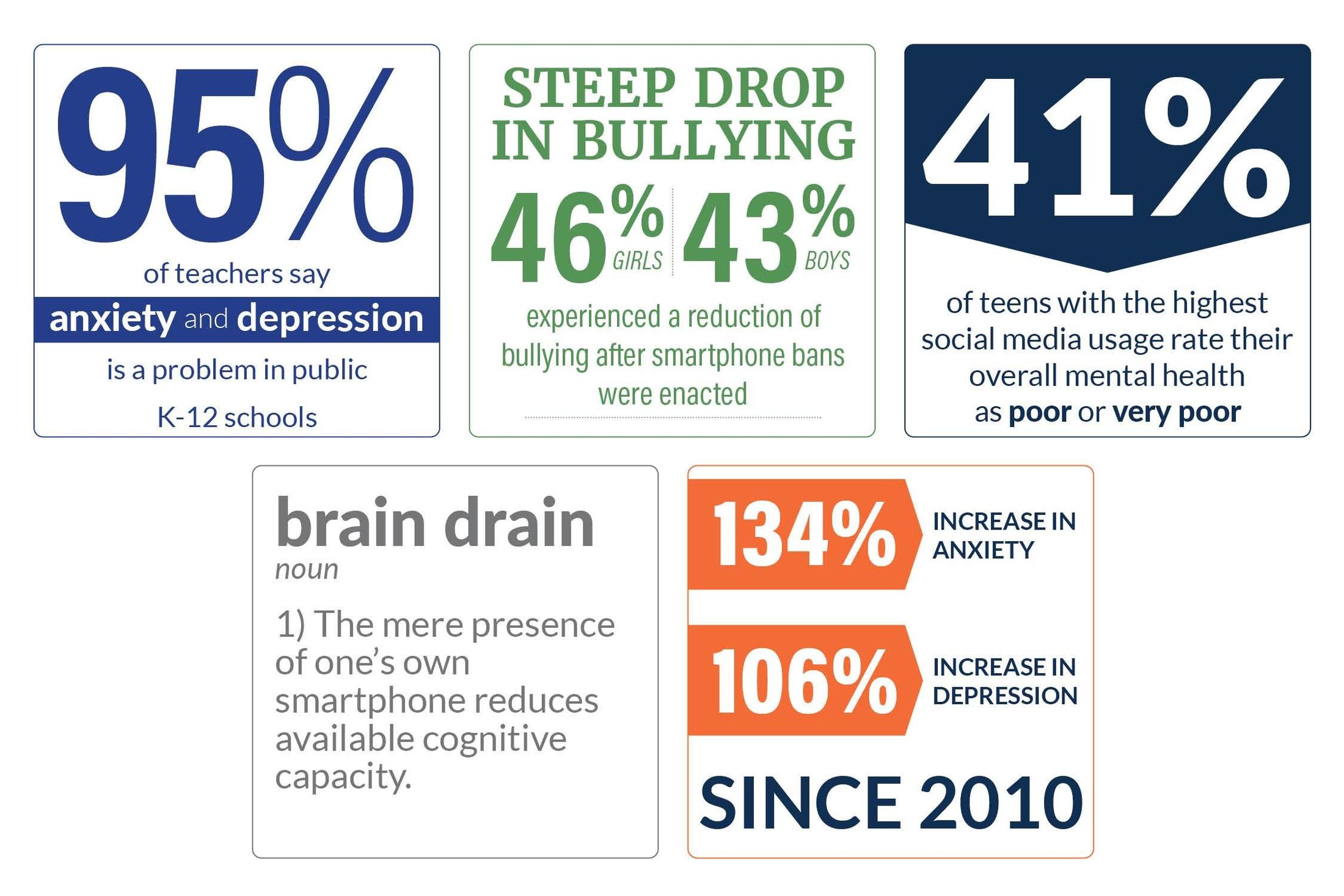
Research shows that cell phone use by students is known to contribute to mental health issues. In addition, they can be a hindrance and a distraction in a classroom setting. The (former) U.S. Surgeon General Dr. Vivek Murthy called for warning labels on social media in June 2024. He then published an advisory on youth and students' mental health and social media.
Research is overwhelming on the effects that social media and mobile devices have on students:
Benefits of Cell Phone-Free Schools
Resources
 Let Grow: "Let Grow champions childhood, helping kids build confidence, resilience, and self-reliance through independent play and real life experiences."
 The Anxious Generation: Four reforms proposed to "provide a foundation for a healthier kind of childhood."
A study by the London School of Economics found that banning mobile phones in schools led to a 6.4% increase in student test scores on average, with the greatest gains seen among lower-achieving students. Beland, L.-P., & Murphy, R. (2016). Ill Communication: Technology, Distraction & Student Performance. Labour Economics, 41, 61–76.
Research from the Rockefeller Institute reported a 44% decrease in average monthly behavioral referrals after implementing cellphone restrictions. Rockefeller Institute of Government. (2023). School Cell Phone Bans & Restrictions.
According to a 2022 study by Rice University, 61% of parents support banning cellphones from classrooms, with support consistent across various demographics. Rice University. (2022). Banning Cell Phones in Classrooms.
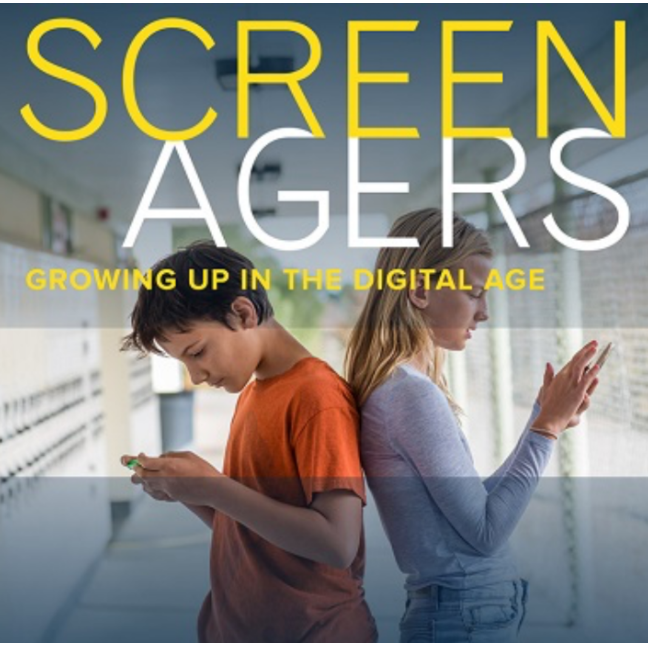
Teens spend an average of 7 hours and 22 minutes daily on screens, not including schoolwork. Screenagers. (2023). Screen Time Trends.
70% of teens report feeling peaceful or happy when they don’t have their phones with them. Screenagers. (2023). Solutions for Teens' Smartphone Use.
In January 2025, a focus group was formed with the goal to review CVSD Policy Board 3245: Students and Telecommunications Devices, which was originally adopted in 2011.
- The group would then make any policy change recommendations to the CVSD Board of Directors.
- The focus group included: 6 parents, 5 teachers, 2 counselors, 2 classified staff, and 7 administrators.
- They reviewed current cell phones in schools research, obtained Student Advisory Council input, and surveyed parents, students, and staff.
See the presentation to the CVSD Board of Directors for details on this process